The governance of the TSARA initiative includes a General Assembly with two Co-chairs bringing together all the organizations involved in the initiative, which has decision-making powers, an executive secretariat to support the implementation of the initiative, and soon an external advisory board made up of external partners to provide scientific and political guidance.
Co-chairs
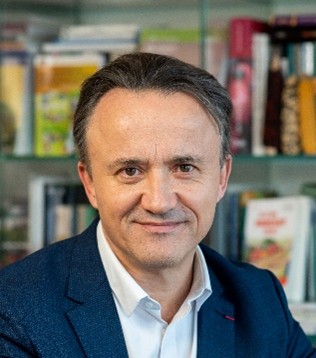
Philippe Mauguin
President and CEO of INRAE - France
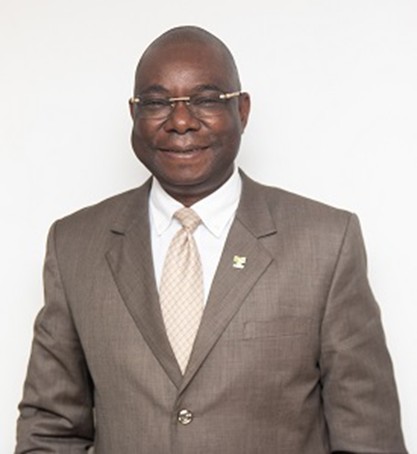
Abdou Tenkouano
President and CEO of ICIPE - Kenya
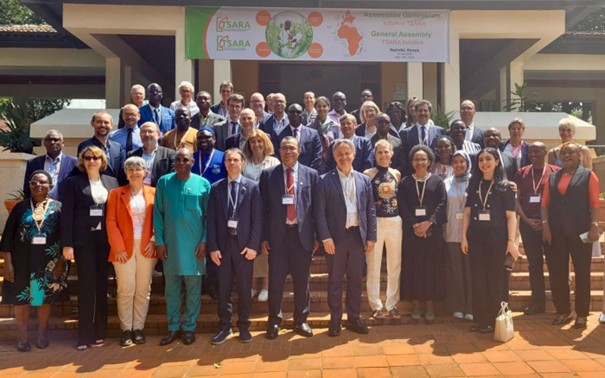
General Meeting
General Assembly representatives from all member institutions that have signed the letter of intent and associate members.
Its role is to make strategic decisions regarding the plan and to oversee its implementation. It meets once a year, except in the case of GA . It reviews the progress made by the thematic groups. It is co-chaired by a representative of African organizations and a representative of European organizations.
The co-chairs are appointed by consensus for a one-year term. In accordance with the principle of rotating chairmanship, the Co-chairs the current year and the following year are involved in preparing the AGM.
At the invitation of one of the co-chairs, these GA in an African country or in Europe. Dedicated funding is being sought for the organization of each GA .
Secretariat
The secretariat oversees the development and monitoring of projects and actions. It works under the authority of the co-chairs ofGA includes members from African and European institutions.
The secretariat also supports the organization of EAC meetings EAC the activities of thematic groups. It is composed of representatives from 12 TSARA member organizations. Half of its members are renewable every three years.
Organization
Country
Representative 1
Representative 2
ARC
South Africa
Bridget Takalani MUROVHI
CILSS
Subregion - Sahel
Hubert N'DJAFA, Ouaga
CIRAD
France
Sandrine DURY
Sasha LEGRAND-VALDES and Sylvie LEWICKI
CNRA
Ivory Coast
Emmanuel COUACY-HYMANN
ENAM
Morocco
Fouad RACHIDI
recipe
Kenya
Thomas DUBOIS
IER
Mali
Mohamed Koulam Dicko
INRAE
France
Marie Schill
Tom Collet
ISRA
Senegal
Tamsir MBAYE
Addis Ababa University
Ethiopia
Yirgalem Nigussie
University of Cheik Anta Diop
Senegal
Mady CISSE
Karamoko DIARRA
Gaston Berger University
Senegal
Joseph Bassama
Obafemi Awolowo University
Nigeria
John ODEDIRE
University of Pretoria
South Africa
Odirilwe Selomane
Dandalene ROBINSON
University of Zimbabwe
Zimbabwe
Prisca H. MUGABE
External Advisory Committee (EAC)
Composed of around ten independent figures appointed byGA sitting intuitu personae for their skills or expertise in the field.
EAC GA strategies to be developed to achieve the initiative's objectives in terms of research, innovation, training, and impact on sustainable development, and advises the working groups. EAC members EAC come from academia, contributing in particular to international scientific expertise, or from institutions engaged in sustainable development (development agencies, financial institutions, foundations, regional organizations).
The composition ofEAC a balance of skills, gender diversity, and geographic diversity. Terms are for two years, renewable, andhalf ofEACis renewed every two years.
Thematic working groups
The thematic working groups set the scientific agenda for the theme in question and develop a portfolio of actions and projects. Each of them is supported by a core group (thematic working group) and a broader scientific community.
They are supported by the secretariat and report on the progress of projects toGeneral Assembly the EAC.
Following the second General Assembly, an interthematic working group was created.