
Partnership-based research promoting sustainable food systems in Africa and Europe is expanding
-
by
TSARA
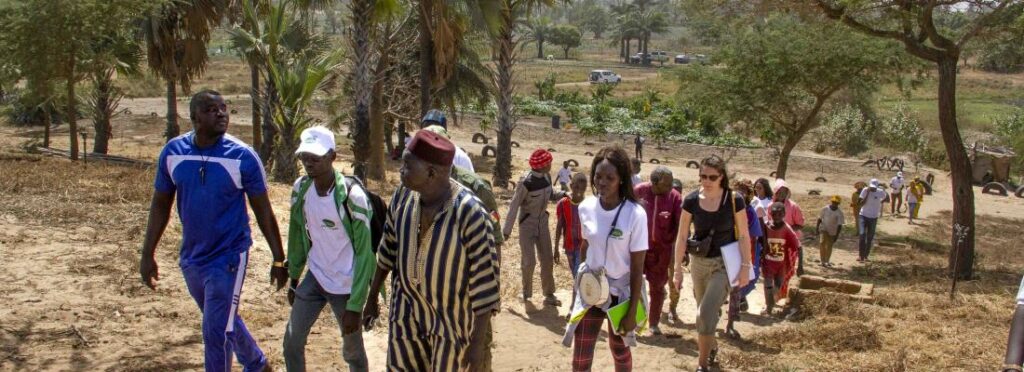
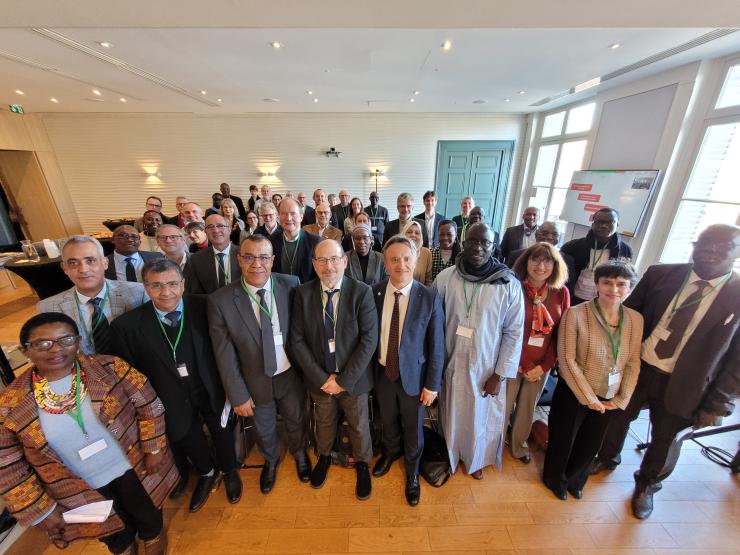
PRESS RELEASE – Faced with climate crises, water scarcity, and food insecurity, TSARA* seeks to transform food systems in Africa and the Mediterranean, combining local innovation and international knowledge sharing. The strategic strengthening and development of the initiative were confirmed by the 3rd General Assembly, held on February 26, on the sidelines of the International Agricultural Show and in the presence of TSARA's 32 member institutions. On this occasion, and with Morocco as this year's guest of honor at the show, ENA Meknes (Morocco) and CIRAD (France) took over the co-chairmanship of TSARA from INRAE and ISRA (Senegal).
Published on February 26, 2025
ThethirdGeneral Assembly provided an opportunity to review progress in implementing the initiative's action plan, discuss the scientific contribution to the revision of agricultural laws in France, Senegal, and Morocco, and address the priorities for 2025. Six new associate members were welcomed to the initiative, and the co-chairmanship of the initiative changed institutions.
"Faced with the major challenges in the areas of agriculture, food, and the environment that Africa and Europe are confronting, in a context heavily marked by climate change, the TSARA initiative demonstrates our collective ability to work on key issues. At the interface between science and public policy, the initiative brings hope, and we can see concrete evidence of agroecology developing in the field,"said Philippe Mauguin, CEO of INRAE, at the handover of the co-chairmanship of the TSARA initiative to the National School of Agriculture (ENA) in Meknes and CIRAD.
"This dynamic is part of an international context in which food security, agroecological transition, and climate resilience are priority issues. Scientific research has a vital contribution to make to future national agricultural legislation. At a time when food sovereignty is a hot topic, it is very exciting to see this initiative grow. TSARA has a huge contribution to make to the dialogue between Europe and Africa," addedElisabeth Claverie de Saint Martin, CEO of CIRAD.
Saïd Amiri, Director of ENAMeknes,continued: "It is an honor to take the chair, alongside CIRAD, of this vast initiative to transform agricultural and food systems in Africa, following on from the seminar we organized last December with 17 institutions from 11 countries on the capacity of science to transform agriculture. Our institution is fully committed to training young farmers in agroecology, with the creation of a new training program and a national center for innovation in agroecology, as part of the Ministry of Agriculture's Green Generation Strategy." This strategy aims to bring about a fair and equitable transformation of the agricultural sector: it seeks to improve the lives of small-scale producers, encourage the emergence of an agricultural middle class, promote environmentally friendly and climate-resilient agricultural practices, and use digital technologies with the goal of connecting 2 million farmers to agricultural services by 2030. One million hectares have already been made available by the government to encourage farmers to set up their businesses.
As guest of honor at the International Agricultural Show, Morocco is participatingin the TSARA initiative through the Meknes National Agricultural School (ENA) and the National Forestry Engineering School, a brand new member of the initiative.
Two flagship projects in the field of food and two new European projects for the Mediterranean
Among TSARA's flagship initiatives, which bring together scientific teams from Morocco, Tunisia, Senegal, and France, is the MAHDIA project focuses on the nexus betweenwater issues, food, and agroecological transition. This project is funded by the French Ministry for Europe and Foreign Affairs. It brings together the National Agronomic Institute of Tunisia (INAT), ENA Meknes, the Senegalese Agricultural Research Institute (ISRA), CIHEAM Montpellier, CIRAD, INRAE, and Institut Agro Montpellier.
Another flagship project of the initiative with partners from South Africa, Senegal, and France is theFAMA project(Foodand Microbiota in Africa),which focuses onmicrobiome nutrition,public policy, consumers, and the food environment, involving a diverse range of stakeholders from research, civil society, and the private sector. The project is supported by the French Embassy in South Africa with funding from the French Ministry for Europe and Foreign Affairs and involves CIRAD, INRAE, the University of Pretoria, the University of the Western Cape, the African Research Council (ARC), the Council for Scientific and Industrial Research (CSIR), and the LARTES-IFAN laboratory at Cheick Anta Diop University, in collaboration with the NGO Siyazisisa Trust and the private group Puratos.
In addition to these two flagship projects, €1.3 million has also been allocated to"starter projects"between 2022 and 2025, focusing onthe nine themes of TSARA. The call for projects in 2025emphasized nutrition, processing, and circularity.
In 2025, TSARA reached a new milestone with the launch ofits first two European projects for the Mediterranean: MORFeuS, focusing on territorial approaches and decision-making tools for resilience (Algeria, France, Morocco, Portugal, Tunisia), and AQUEDUCT, focusing on methods for accounting for water in crisis situations, climate change, and external shocks (Spain, France, Italy, Morocco, Tunisia).
A working group dedicated to the science and policy interface to contribute to agricultural policy laws
Furthermore,in the context of agricultural reforms in Africa and Europe, the initiative has established a working group dedicated to the science-policy interface. This group will consolidate TSARA's scientific contributions to public agricultural policies on issues such as food sovereignty, agricultural employment, and the management of common resources.
"Agriculture is a key driver for creating sustainable jobs, particularly for young people. The conference we organized in Dakar at the end of 2024 highlighted concrete avenues for the new agro-sylvopastoral policy law. TSARA's work, by facilitating the interface between science, policy, and the field, supports these reforms and implements practical solutions to modernize the sector and make agricultural professions attractive," emphasized Moustapha Gueye, Director General of the Senegalese Institute for Agricultural Research (ISRA) and outgoing co-chair of TSARA.
In terms of stakeholder engagement, the originality of the TSARA project lies in its high-impact initiatives, such as this international conference on the challenges and future of employment in agriculture, as well as jointly developed webinars on other topics such as soil and local animal breeds.
Six new members join TSARA
TSARA continues to expand into Europe and English-speaking African countries with the addition of six new associate members:
- Addis Ababa University (Ethiopia)
- CIHEAM Montpellier (France)
- ENFI, National Forestry Engineering School (Morocco)
- IRD, Research Institute for Development (France)
- NMAIST, Nelson Mandela African Institute of Science and Technology (Tanzania)
- Obafemi Awolowo University (Nigeria)