

Diet RestorPro
-
by
TSARA
A Study of the Therapeutic Potential of Traditional African Fermented Foods in the Context of Chronic Inflammatory Bowel Diseases (IBD).
Partners:
- University of Namibia (UNAM)
- Cape Peninsula University of Technology (CPUT, South Africa)
- INRAE
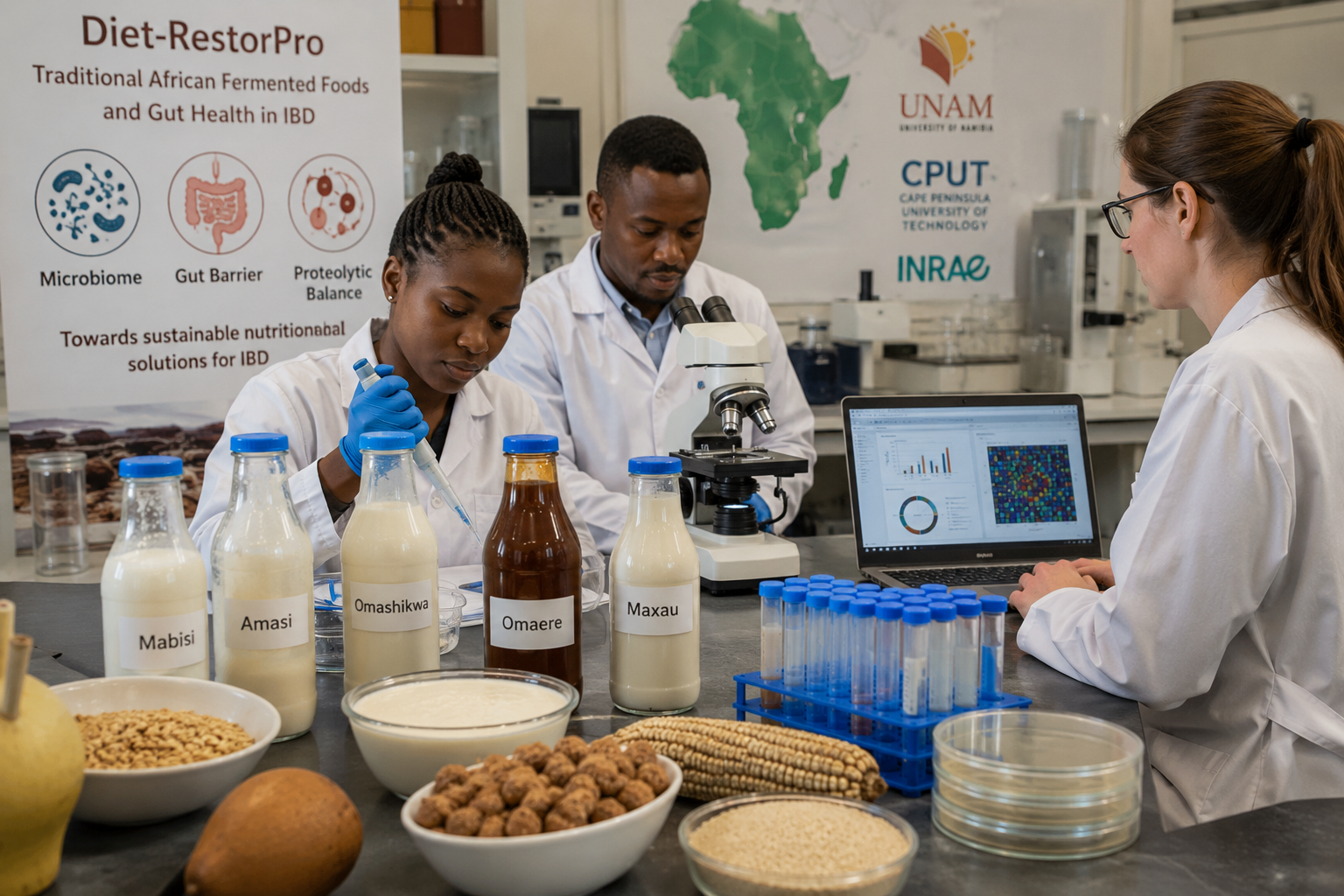
Diet-RestorPro is investigating the link between diet, the gut microbiota, and human health in the context of chronic inflammatory bowel diseases (IBD). The project focuses specifically on the therapeutic potential of traditional African fermented foods and how these foods help restore key biological functions that are impaired in IBD, namely the composition of the gut microbiota, the integrity of the intestinal barrier, and proteolytic balance.
Unlike pharmacological treatments, whose long-term efficacy remains limited, fermented products contain beneficial microorganisms, bioactive compounds, and probiotics that may positively influence gut health. However, despite the rich diversity of traditional African foods, they remain largely under-explored in scientific research, particularly with regard to their impact on the gut microbiota and the host response.
The project is based on a simple observation: if diet strongly influences the structure and function of the gut microbiota, certain foods might also help reduce chronic inflammation. With this in mind, Diet-RestorPro is exploring fermented products from African food traditions that have not yet been extensively studied, including fermented milks, cereal-based beverages, fermented plant-based foods, and fruit-based beverages, positioning African fermented foods as promising, accessible, and sustainable tools for the long-term management of IBD. These foods were chosen because they are culturally rooted, widely consumed locally, and likely to contain microorganisms and bioactive compounds that are beneficial to the gut.
Additional Expertise
The project brings together three complementary partners. The University of Namibia is responsible for producing foods and beverages using traditional fermentation practices, ensuring their cultural and biological relevance. It also handles the initial stages of protein processing and extraction, as well as the preparation of standardized samples. The Cape Peninsula University of Technology conducts enzymatic profiling and contributes to biochemical extraction as well as the fractionation of proteins and metabolites. INRAE leads the advanced microbial and functional characterization of the products, notably through metagenomic sequencing and in vivo studies using murine models of IBD. This collaboration enables the process to span from food production to the evaluation of their biological effects in an experimental setting.
A TSARA-certified project
Thanks to TSARA, the project benefits from enhanced interdisciplinary integration, linking food science, microbiology, health, and agricultural systems within a broader perspective on food systems. The initiative also facilitates capacity building and knowledge transfer, particularly by strengthening the scientific expertise and infrastructure of African partner institutions.
The initial results are promising. Several fermented products show a strong ability to inhibit enzymes involved in inflammation, such as elastase, cathepsin G, trypsin, and chymotrypsin. Mabisi, in particular, has marked effects on some of these targets. Other results also indicate interesting potential regarding enzymes involved in carbohydrate and lipid metabolism, which broadens the project’s scope beyond IBD alone.
The next phase of the project will aim to consolidate these initial findings, gain a better understanding of the mechanisms of action of fermented foods, and identify the most active compounds or microorganisms. Ultimately, Diet-RestorPro could help develop simple, accessible, and culturally appropriate nutritional approaches to support the management of IBD, while promoting traditional African dietary knowledge.