MORFeuS
-
by
TSARA
Nexus Solutions for Resilient Mediterranean Regions
Partners
- INRAE – France
- CIRAD – France
- Institut Agro Montpellier – France
- HSTI Soil Moisture Probes – France
- Research Institute for Development – France
- Narbonnaise Regional Nature Park – France
- Research Center for Applied Economics for Development – Algeria
- Pomme M’Semrir-Tilmi Economic Interest Group – Morocco
- National Agricultural School of Meknes – Morocco
- Hassan II Institute of Agronomy and Veterinary Medicine – Morocco
- Orvignon Strategy and Management – Morocco
- University of Algarve – Portugal
- Lisbon School of Economics and Management – Portugal
- Rizoma Cooperativa Integral – Portugal
- Support and Research for Development – Tunisia
- National Agronomic Institute of Tunisia – Tunisia
Funding: PRIMA Program, Section 1
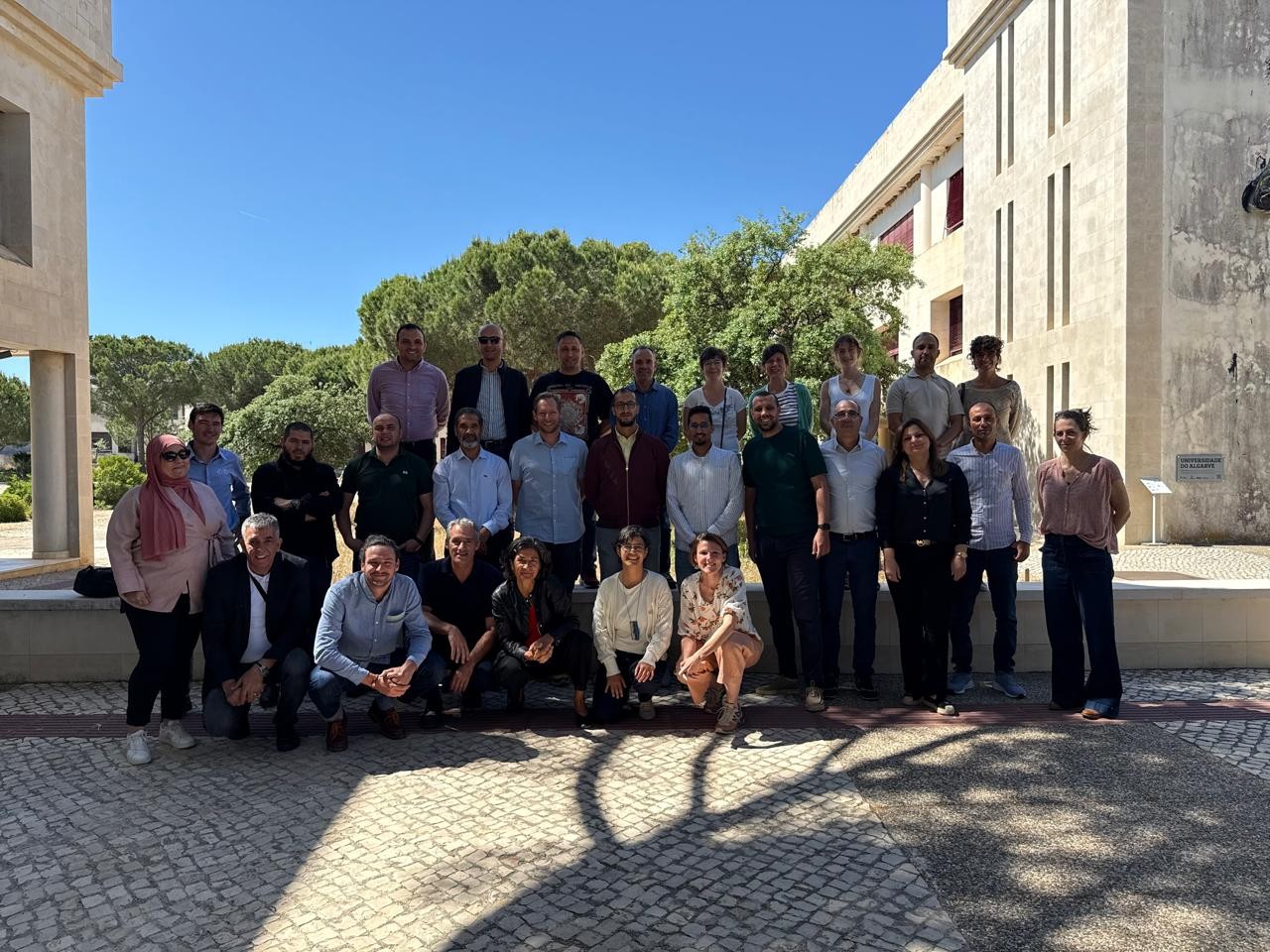
MORFeuS is a flagship European project that brings together researchers, farmers, local authorities, and policymakers around a common challenge: to collaboratively address water, energy, food, and ecosystems in order to chart sustainable development paths in Mediterranean regions.
Thinking Holistically About Water, Energy, Food, and Ecosystems for Resilient Mediterranean Regions
In a Mediterranean region facing a growing water crisis and the need to better coordinate water, energy, and food use with ecosystem conservation, the European MORFeuS project (Mediterranean Operational Resilience Framework for nexus-based territorial Solutions) aims to co-design, evaluate, and integrate—in collaboration with local stakeholders—combinations of technical, organizational, and institutional solutions tailored to each territory and capable of increasing their resilience to climate change.
A Mediterranean region under severe strain
The project’s partner regions (Algeria, France, Morocco, Portugal, and Tunisia) are facing more frequent droughts, a decline in freshwater availability, and an increase in conflicts over water use between agriculture, energy, and biodiversity. These tensions highlight the limitations of traditional sectoral policies, which are often unable to account for the interdependencies between resources (water, energy), production systems, and territorial development. In this context, regions must rethink their development models to ensure their long-term resilience.
The MORFeuS project is based on theWEFE(Water-Energy-Food-Ecosystems)Nexusanalytical framework, which aims to take an integrated approach to the interactions between water resources, energy systems, food production, and ecological dynamics.
“This approach offers a systemic view of the challenges facing a region, making it possible to analyze the dynamics of its various sectors, the stakeholders involved, and the resulting cooperation or tensions. This framework makes it possible to align the perspectives of the various stakeholders with a view to taking action together.”
A network of five pilot sites in the Mediterranean
Through demonstration sites (DS), researchers can test and improve solutions, compare results across different sites, and make concrete recommendations to improve public policy. The project is centered around five pilot demonstration sites: the Aude Valley in France, the Dadès Valley in Morocco, the Central Algarve in Portugal, El Alaa in Tunisia, and Ghardaïa in Algeria. It employs a participatory approach in which farmers, local authorities, private partners, researchers, and policymakers work together to co-design solutions and their implementation.
A Five-Step Action Research Approach
- Shared Territorial Assessment: Analysis of Local Vulnerabilities and Socio-Technical and Socio-Ecological Dynamics, and Identification of Promising Local Solutions
- Co-design of integrated Nexus solutions: collaborative development of combinations of technical, organizational, and governance solutions involving local stakeholders, researchers, and public policymakers
- Sharing experiences among the five partner regions
- Testing and Evaluation of Solutions: On-Farm Trials, Expert Analysis, and Modeling Tools
- Deployment and Transferability: An Analysis of the Conditions for Disseminating Results Across the Mediterranean Region
Three main types of levers to explore
- Techniques: agroecology, water reuse, nature-based solutions, moisture sensors, farm-scale sustainability assessment tools
- Organizational: collective water management, development of solar energy for collective irrigation, short food supply chains
- Institutions: Changes in Public Policies, Related Instruments, and Territorial Governance Frameworks
The MORFeuS project thus aims to develop integrated solutions tailored to local contexts, create decision-support tools for public policy, and establish models of participatory, multi-stakeholder governance and lessons learned that can be applied to other Mediterranean regions. In a second phase, the project aims to apply these results to the Western Mediterranean region.
For more information, visit the website: https://morfeus.hub.inrae.fr/