

REUSE4Africa
-
by
TSARA
Research and Innovation for Water Reuse and the Circular Economy for Sustainable Development in Africa
Partners
- LBE
- University of Montpellier
- INRAE,
- LAMSIN
- ENIT
- Tunis El Manar University
- AQUABIOTECH, Cady Ayyad University
- REACT
- Tunisian Association for Sustainable Development,
- Research in Action
- ClimET Lab
- University of Parakou
- LACEEDE
- University of Abomey-Calavi, Benin
- HSM
- University of Montpellier (UM),
- IRD
- CNRS
- IMT Mines Alès
- Hydropolis
Funding: This research was partially funded by the COST Action CA23104, the UNESCO ICIREWARD in Montpellier, and the TSARA initiative.
REUSE4Africa: An African Network to Promote the Use of Non-Conventional Water Resources
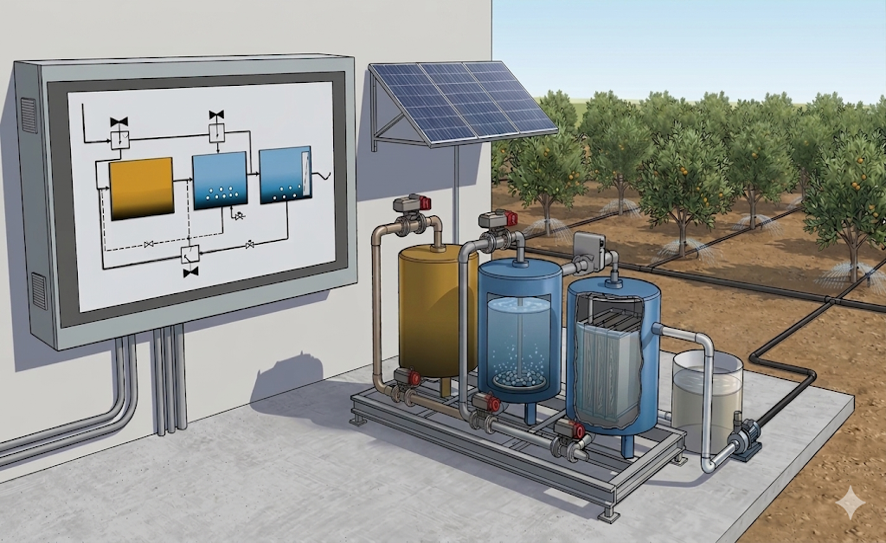
Against a backdrop of growing water stress and rising water demand from agriculture, industry, and cities, the reuse of non-conventional water sources is emerging as a strategic lever for strengthening the resilience of regions across Africa. While many initiatives already exist, lessons learned have not been sufficiently capitalized on, which limits their impact on a continental scale and hinders the development of robust public policies.
Establishing an African research and innovation network on water reuse appears to be a scientific, technical, and institutional necessity. Such a network would make it possible to pool expertise, build local capacity, and foster the development of solutions tailored to African socio-environmental contexts by integrating technological, agronomic, environmental, and socio-economic dimensions.
An integrative project on multiple scales
This project is part of a multi-scale effort linked to several complementary initiatives:
- It builds on the COST Action CA23104 Water4Reuse, which has established a European scientific community, with plans to expand to the African continent.
- It draws on theTSARA Initiative’s water task force, which identifies water reuse as a key lever for securing agricultural water supplies and enhancing resource circularity.
- It is aligned with the IRN initiative led by the IRD,REUSE4Africa, which brings together some 20 institutions in 12 countries.
- It is part of the initiative to establish a UNESCO Chair dedicated to governance and ecological transition in Morocco, complementing the UNESCO EDE Chair in Tunisia.
The originality of this contribution lies in its ability to bring together these various initiatives (COST, TSARA, IRD, UNESCO) into a coherent vision for Africa, moving from isolated approaches to an integrated network-based approach.
Network Objectives
- Building an interdisciplinary scientific community on a continental scale
- Developing common frameworks tailored to African contexts
- Promote the implementation of regional demonstration projects and pilot projects
- Building Capacity Through Training and Mobility
- Jointly develop governance and economic models that promote water circularity
- Support the emergence of large-scale collaborative projects
The project promotes an integrated approach to the water–energy–food–ecosystems (WEFE) nexus, aligned with the principles of frugality and circularity, while emphasizing the importance of social and institutional dimensions.