

StimLactationPlantsRDC
-
by
TSARA
Surveys on Breastfeeding Practices in the Southeast of the Democratic Republic of the Congo.
Partners:
- UMR Nantes University – INRAE PhAN, France
- CIRAD, France
- FSAE; Faculty of Food and Environmental Sciences
- New Horizons University (UNH), DRC
Breastfeeding is recommended by the World Health Organization (WHO) for its ability to reduce infant mortality and gastrointestinal and respiratory infections, as well as to lower the risk of breast and ovarian cancer and type 2 diabetes in mothers. However, breastfeeding rates in many countries fall far short of WHO targets.
To compensate for a lack of or low supply of breast milk, women turn to galactogenic herbs, which are traditionally used to stimulate milk production. The use of such herbs, as well as the methods of preparation and administration, vary widely.
In Africa, research on breastfeeding practices plays a vital role in documenting the ethnobotanical knowledge associated with lactation. This research not only identifies the main plants used but also describes how they are prepared, how they are administered, and the cultural contexts that shape their use.
In the DRC, galactogenic plants have been very little studied from an ethnobotanical, pharmacological, and clinical perspective, which stands in stark contrast to the exceptional richness of Congolese plant biodiversity and the breadth of traditional knowledge regarding maternal and neonatal health.
Filling Knowledge Gaps to Support Breastfeeding
This research project aims to address this knowledge gap, which not only limits the promotion of local expertise but also hinders the identification of plant resources that could be useful for supporting breastfeeding, improving public health, and guiding innovative biomedical research.
The project involves field surveys of breastfeeding practices, the identification of galactogenic plants, and the extraction of the aqueous and organic fractions from these plants to determine the content of bioactive molecules that may affect lactation. In the medium term, the project aims to test the effects of these plants on lactation in preclinical models.
The results of this research could contribute to the establishment of a milk bank in the city of Lubumbashi (the second-largest city in the DRC). Since the creation of each milk bank is associated with an increase in the breastfeeding rate in its immediate vicinity, this would represent an additional health benefit for the local population. Another potential avenue is breastfeeding education in health care centers and Maternal and Child Health (MCH) centers, to raise awareness of best practices and the benefits of breastfeeding for both mother and child, and to reevaluate certain neonatal feeding practices, such as the use of water or glucose.
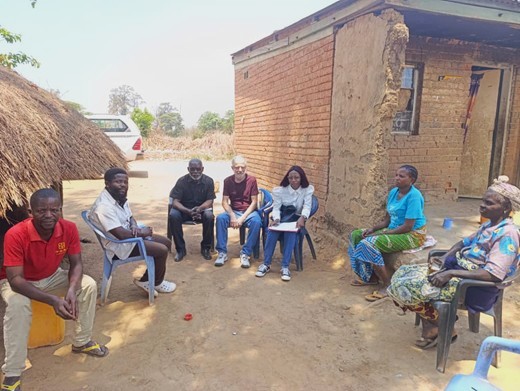
To date, 65 mothers have completed the questionnaire, and field surveys are continuing to collect data in areas farther from the city and from traditional healers. These surveys are being conducted in parallel with the identification of galactogenic plants.
“While81% of mothers breastfeed at birth—which is a very high rate—nearly 2 out of 3 mothers experienced delays in initiating breastfeeding. This project highlights the need to support mothers in healthcare facilities (public, private, and missionary) and to train healthcare staff on both breastfeeding practices and maternal nutrition, with the goal of improving public health.”