

AFRICOLD
-
by
TSARA
Challenges and Opportunities Related to Cold Chain Infrastructure in Hot Climates
Partners:
- INRAE, France
- UCAD, Senegal
- UDSM, Tanzania
In many sub-Saharan African countries, losses due to a lack of post-harvest cold storage infrastructure are considerable: up to 30–80% depending on the sector, compared with about 12% globally. In Senegal, nearly 45% of fruits and vegetables may be lost after harvest; in Tanzania, the figure is around 40%.
These losses have a significant environmental impact, undermine food security, and threaten the economic stability of smallholder farmers. Strengthening the cold chain is therefore a key strategy for reducing food losses, improving product quality, and enhancing the sustainability of food systems.
In this context, the AFRICOLD project, led by INRAE, UCAD (Senegal), and UDSM (Tanzania), analyzes cold chains in strategic sectors in West and East Africa. The project draws on specific case studies: mangoes and carrots in Senegal, and avocados in Tanzania. It combines field measurements, interviews with stakeholders, and refrigeration expertise to identify critical issues and propose solutions tailored to hot climates and producers’ needs. AFRICOLD is advancing on two fronts: gaining a detailed understanding of existing supply chains and testing ways to improve them.
Mangoes and carrots in Senegal, as well as avocados in Tanzania, were selected because they present both significant economic potential and major post-harvest vulnerabilities. The INRAE-FRISE team contributes its expertise in refrigeration processes and cold chain diagnostics. UCAD coordinates the project’s operations in Senegal for the mango and carrot sectors, while UDSM organizes the work in Tanzania for avocados. Specifically, the teams are mapping stakeholders, conducting interviews, equipping logistics networks with sensors (temperature, humidity, light, impact, GPS), and then cross-referencing this data to identify critical points and propose appropriate low-tech solutions.
Preliminary Results
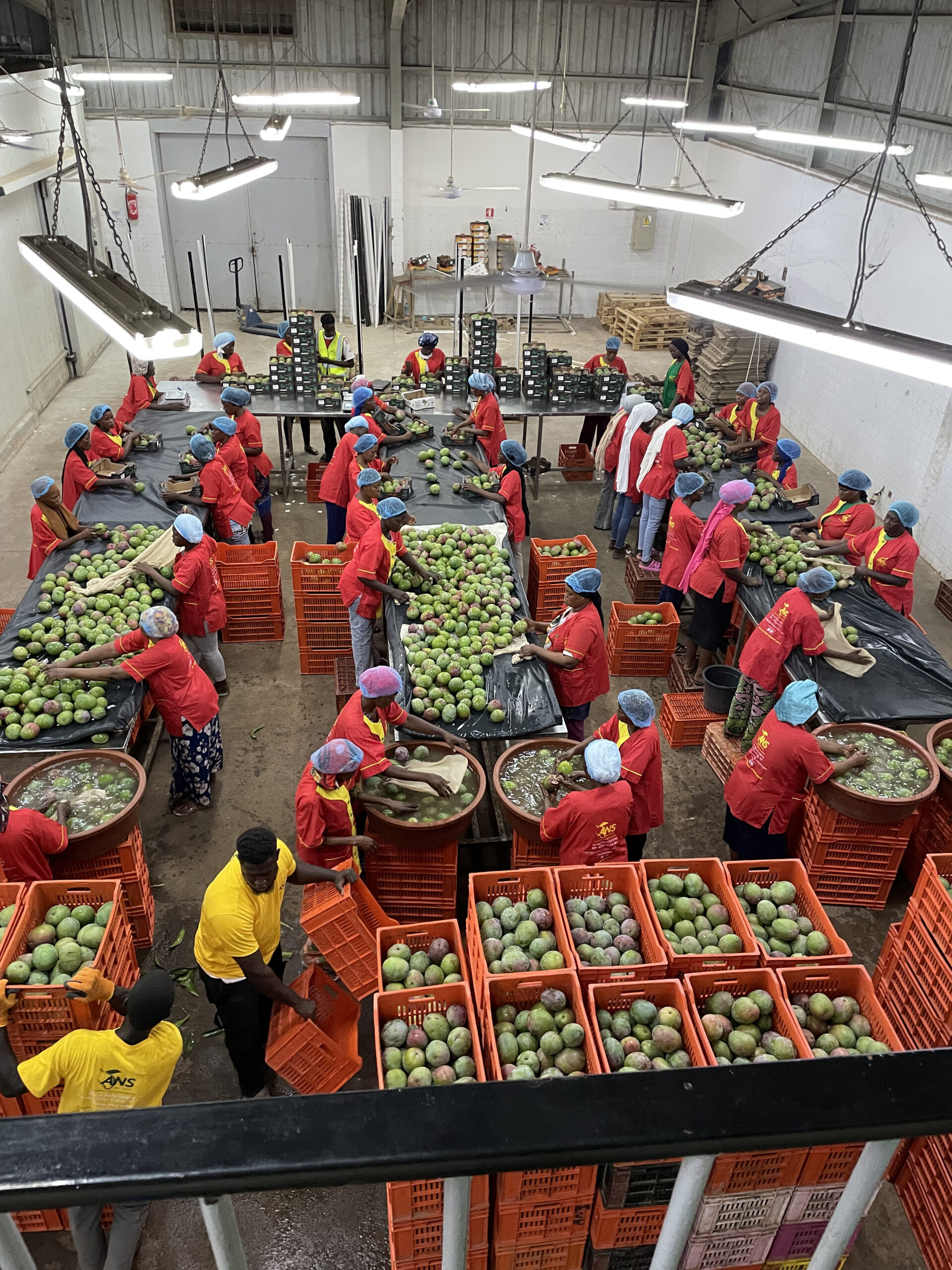
During the first year, a field mission to Senegal provided an opportunity to study the mango supply chain in the three main production areas. The interviews conducted partially confirmed our initial hypotheses but, more importantly, helped identify the actual constraints faced by stakeholders in the supply chain as well as their priorities. These interviews highlighted major technical and organizational challenges, such as the lack of transportation infrastructure owned by producers—and consequently their heavy reliance on transporters—the intense pressure exerted by intermediaries, and the saturation of local markets due to a lack of preservation solutions, all of which lead to losses. These losses, estimated locally at between 20 and 30 percent, are not only due to a lack of cold storage facilities but also to the proliferation of the mango fruit fly, which is a real scourge and causes considerable losses even at the field level.
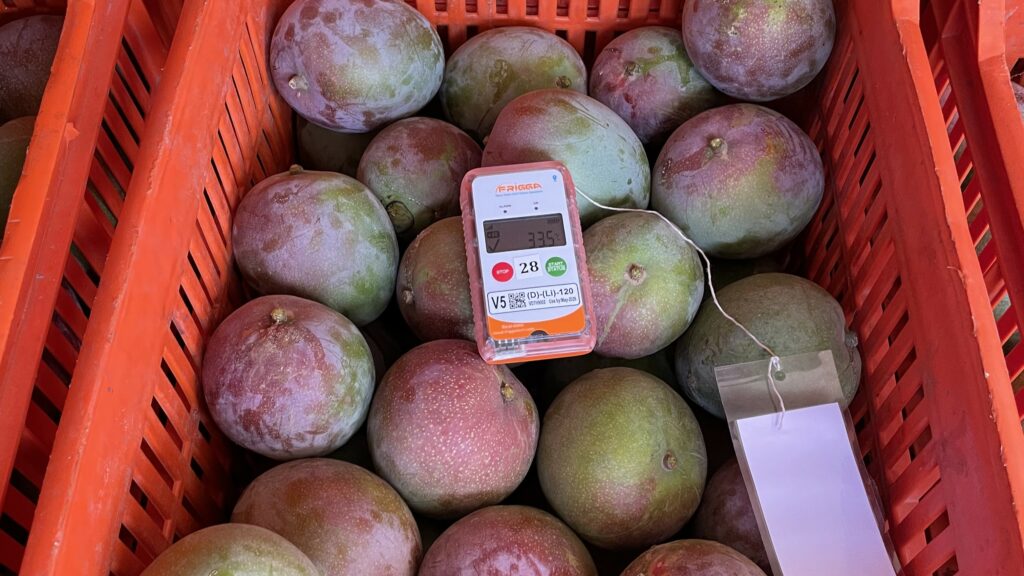
A key finding is the identification of two types of supply chains: the export supply chain, which is almost entirely refrigerated, and the local supply chain, characterized by a complete lack of refrigeration infrastructure. The measurements reveal very clear differences: in non-refrigerated supply chains, the fruit is exposed to temperatures ranging from 30 to 40 °C; in the refrigerated supply chain analyzed, temperatures stabilize around 8 to 12 °C, but the initial cooling is slow when the fruit is not pre-cooled, and a break in the cold chain occurs during unloading.
Next Steps
In the second year, the project will expand its work to include carrots in Senegal and avocados in Tanzania, with trials in France to test different combinations of temperature and humidity. The project will then move into a phase of testing low-impact technological solutions adapted to local conditions.
“AFRICOLD shows that the mango cold chain in Senegal is not just a matter of equipment. It is a comprehensive system that connects producers, cooperatives, transporters, exporters, available energy, and handling practices. In the field, just a few hours of exposure to heat or a fruit that hasn’t been pre-cooled can significantly reduce the value of an entire harvest. “Our goal is to work with our African partners to identify the most useful, efficient, and realistic solutions for reducing losses and securing incomes. TSARA enables us to do this by co-developing research with local teams and industry stakeholders, based on their actual constraints and priorities.”